Introduction
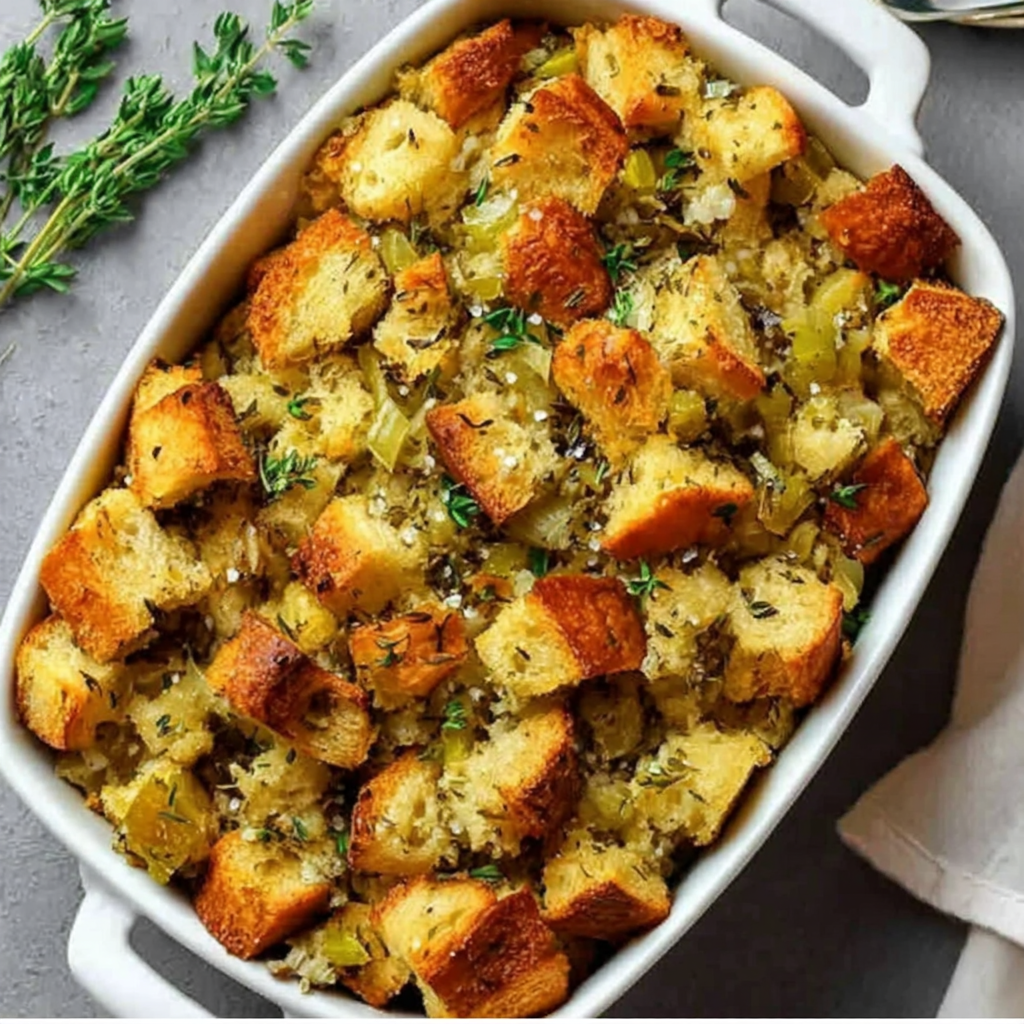
Thanksgiving is a time for family, friends, and of course, food. Among the many dishes that grace the table, stuffing holds a special place. This dish, sometimes debated over its name—stuffing or dressing—has become a beloved staple in Thanksgiving celebrations.
The beauty of stuffing lies in its versatility. While some may favor a classic bread-based version, others embrace the creative potential with various ingredients. This recipe balances tradition with a unique twist, ensuring every bite is flavorful and comforting, perfect for the holiday.
Ingredients
- 1 loaf of crusty bread, cubed (about 8 cups)
The bread is the base of the stuffing, creating the necessary texture. Choosing a crusty loaf allows for a hearty structure that absorbs flavors without becoming mushy. - 1/2 cup unsalted butter
Butter adds richness and moisture to the stuffing, enhancing the flavor and mouthfeel. It’s essential for sautéing the vegetables, ensuring they release their natural flavors. - 1 large onion, diced
Onions bring sweetness and depth to the stuffing. Sautéing them softens their bite, creating a foundational layer of flavor that elevates the entire dish. - 2 celery stalks, diced
Celery adds a refreshing crunch and a subtle earthy note. It balances the richness of butter and gives the stuffing a pleasant texture. - 2 cloves garlic, minced
Garlic contributes a savory depth, infusing the stuffing with aroma and taste. It complements the other flavors beautifully when sautéed. - 1 teaspoon dried sage
Sage is a classic herb for Thanksgiving stuffing, imparting a warm, earthy flavor that pairs perfectly with poultry. Its aroma evokes the essence of the holiday. - 1 teaspoon dried thyme
Thyme brings a subtle floral note and enhances the richness of the dish. Together with sage, it creates a harmonious flavor profile. - 1/2 cup dried cranberries
Adding cranberries introduces a touch of sweetness and tang, balancing the savory elements. Their chewiness provides an interesting contrast in texture. - 1/2 cup chicken or vegetable broth
Broth is crucial for moistenening the dry ingredients and infusing flavor. It helps bind the stuffing without making it soggy. - Salt and pepper to taste
Seasoning elevates the flavors, making sure the stuffing is balanced. Proper seasoning is essential to bring all the ingredients together.
Directions & Preparation
Step 1: Preheat your oven to 350°F (175°C).
Preheating the oven ensures that the stuffing cooks evenly and thoroughly. A steady, moderate heat allows for a perfect texture, creating a crispy top while maintaining a flavorful moist interior.
Step 2: Spread the bread cubes on a baking sheet and toast them in the oven for about 15 minutes.
Toast the bread until lightly golden to dry it out, which helps achieve the ideal stuffing texture. Dry bread soaks up flavors without becoming mushy, leading to a satisfying bite.
Step 3: In a large skillet, melt the butter over medium heat. Add the diced onion and celery, cooking until softened, about 5-7 minutes.
This initial step develops a fragrant base for your stuffing. Sautéing the onion and celery allows them to caramelize slightly, enhancing their flavors and ensuring they integrate well into the stuffing.
Step 4: Add the minced garlic, sage, and thyme, cooking for another minute until fragrant.
Introducing garlic and herbs at this point maximizes their flavor. Cooking them briefly in butter releases essential oils, infusing the mixture with aromatic intensity.
Step 5: In a large bowl, combine the toasted bread cubes, sautéed vegetables, dried cranberries, salt, and pepper.
Mixing the ingredients in a bowl allows for an even distribution of flavors. The dry bread will absorb the flavors of the sautéed mix, while cranberries add delightful bursts of flavor.
Step 6: Pour in the broth gradually, stirring until evenly moistened. You want the mixture to be moist but not soggy.
Adding broth gradually ensures the stuffing reaches the perfect consistency. You want moisture distributed throughout, which will help the stuffing cook uniformly in the oven.
Step 7: Transfer the stuffing mixture into a greased baking dish, covering with foil.
Covering with foil during the initial baking helps retain moisture. It allows the stuffing to steam slightly before it develops a crust, preventing it from drying out.
Step 8: Bake for 25 minutes covered, then remove the foil and bake for an additional 15-20 minutes until golden brown.
Baking with the foil on keeps the stuffing moist, while removing it allows for browning. The final phase ensures a crispy top, contrasting the tender stuffing beneath.

Exploring Flavor Combinations
One of the joys of making stuffing is the opportunity to experiment with flavors. While this recipe showcases traditional ingredients, consider incorporating extras like nuts or different dried fruits to enhance depth. Each addition can transform the dish while complementing the rustic bread base.
Perfecting the Texture
Achieving the right texture in stuffing is crucial. The balance between dryness and moisture can make or break the dish. Utilizing a combination of toasted bread and gradual broth addition allows for that sought-after crunch on top while keeping the interior soft and flavorful.
Serving Suggestions
While stuffing shines as a Thanksgiving side, consider how versatile it can be beyond the holiday. Pair it with roasted vegetables, alongside a savory gravy, or even as a filling in a quiche. This dish transcends its traditional role, making it a delicious addition to any meal.
FAQs
What if my stuffing turns out too dry?
If the stuffing is dry, add a little more broth gradually while mixing until you achieve your desired moisture level, then reheat in the oven.
How can I adjust the flavors if it tastes bland?
Tasting during preparation is key; if underseasoned, consider adding more salt, pepper, and adjusting herbs to enhance the overall flavor.
Can I use different types of bread?
Absolutely! Feel free to mix various breads like cornbread or sourdough for a unique flavor and texture experience.
What if I want it to be spicier?
Incorporate a pinch of red pepper flakes or diced jalapeños to elevate the heat levels while balancing the sweetness from cranberries.
Why did my stuffing become mushy?
Mushy stuffing can occur from too much liquid; ensure you add broth slowly and check the consistency as you mix.
Is it possible to add meat to the stuffing?
Yes! Adding cooked sausage or diced turkey can enhance flavor and substance, making it even more filling.
Conclusion
Thanksgiving stuffing is more than just a side dish; it embodies the spirit of the holiday—comfort, warmth, and togetherness. With this recipe, you'll create a deliciously memorable stuffing that family and friends will cherish.
As you prepare this dish, remember it’s adaptable. Feel free to infuse your own personal touches, making the stuffing a reflection of your culinary creativity. Enjoy your Thanksgiving celebration!
Recipe Card
Creating a Delicious Burrata Pasta Experience
Ingredients
- 400 g pasta spaghetti or fettuccine
- 250 g burrata cheese
- 2 tablespoons olive oil
- 2 cloves garlic minced
- 300 g cherry tomatoes halved
- Fresh basil leaves for garnish
- Salt and pepper to taste
Instructions
- Cook the pasta according to package instructions.
- In a large skillet, heat olive oil over medium heat.
- Add minced garlic and halved cherry tomatoes to the skillet.
- Combine the drained pasta with the tomato mixture in the skillet.
- Fold in the burrata gently, allowing it to melt slightly.
- Season with salt and pepper, and garnish with fresh basil.
Notes
Additional serving suggestions: pair with a crisp salad, garlic bread, or roasted seasonal vegetables for balance.
For make-ahead, prep components separately and assemble just before heating to preserve texture.
Taste and adjust with acid (lemon/vinegar) and salt right at the end to wake up flavors.