Introduction
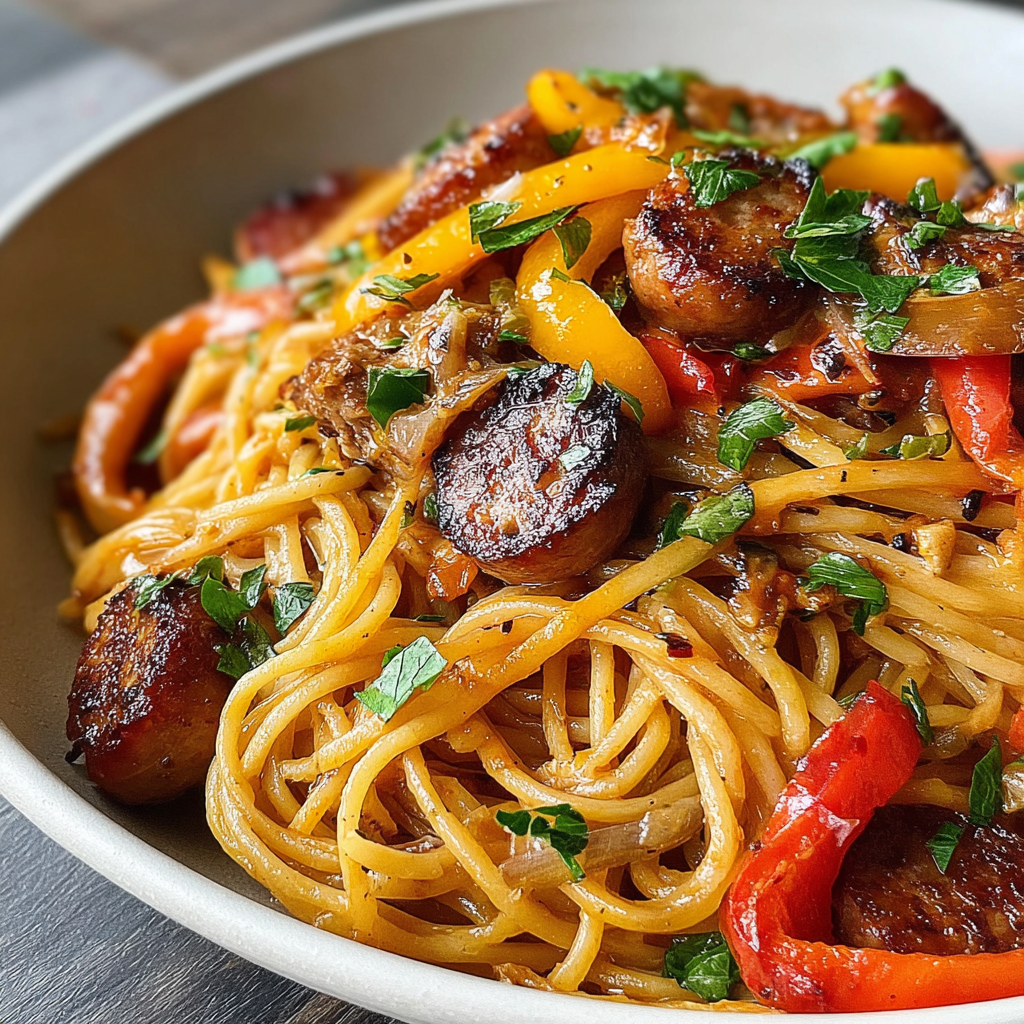
Spaghetti with sausage and peppers is a comforting dish that brings warmth and satisfaction to the dinner table. The combination of savory sausage and sweet, caramelized peppers creates a harmony of flavors that is both hearty and delightful. It's an ideal option for weeknight meals or casual gatherings.
This recipe showcases the versatility of pasta while highlighting the rich flavors of Italian cuisine. With just a few ingredients and some simple techniques, you can create a dish that’s aromatic, colorful, and invigorating. Whether you're feeding a family or hosting friends, this dish fit right in at any occasion.
Ingredients
- 12 ounces spaghetti
Spaghetti is the backbone of this dish, providing a hearty base that complements the textures of the sausage and peppers. Its long strands soak up the sauce beautifully, ensuring each bite is mouthwatering. - 1 pound Italian sausage
The sausage adds a robust, meaty flavor that is essential to this dish. Choose between spicy or sweet varieties based on your preference for heat, as they both bring their unique character to the overall flavor. - 2 tablespoons olive oil
Olive oil is used to sauté the ingredients, adding richness and depth to the dish. It also helps in cooking the sausage, allowing it to brown nicely and develop complex flavors. - 1 medium onion, sliced
Onions provide a sweet and aromatic base, caramelizing during cooking to enhance the overall flavor of the dish. Their sweetness balances the savory elements and adds a touch of sophistication. - 2 bell peppers (red and yellow), sliced
Bell peppers contribute vibrant color and a sweet crunch, elevating the dish visually and texturally. Cooking them until tender allows their natural sugars to caramelize, which enriches the sauce. - 2 cloves garlic, minced
Garlic adds a fragrant aroma and sharp flavor that enhances the overall dish. It should be added near the end of sautéing to prevent burning, providing a punchy essence to the noodles. - 1 can (14.5 ounces) diced tomatoes
Canned diced tomatoes serve as the base for the sauce, offering a juicy and tangy component. They create moisture and flavor, helping to bind the ingredients together while delivering a fresh taste. - 1 teaspoon dried oregano
Dried oregano infuses the dish with a classic Italian flavor. It's important for enhancing the herbaceous notes and complementing the meatiness of the sausage. - Salt and black pepper to taste
Basic seasonings like salt and pepper are vital in bringing all the flavors together. They enhance the overall taste and balance the sweetness of the peppers and the savory sausage. - Fresh basil leaves for garnish
Basil adds a fresh, aromatic finish to the dish, elevating it both visually and in flavor. Sprinkling fresh basil before serving ensures that the dish feels bright and lively.
Directions & Preparation
Step 1: Cook the spaghetti until al dente according to package instructions.
Starting with the spaghetti, it's vital to cook it just until al dente, which translates to 'to the tooth'. This provides the perfect texture for the pasta, ensuring it won't become mushy once combined with the sauce. Reserve some pasta cooking water before draining; it can help thicken the sauce later.
Step 2: In a large skillet, heat olive oil over medium heat.
Heating the olive oil properly is crucial for the next steps. It should shimmer without smoking; too hot and it may burn, too cold and the ingredients won’t brown well. The oil is what will release the flavors of the sausage as it cooks.
Step 3: Add the sliced sausage to the skillet, breaking it up with a spatula.
Cooking the sausage until browned is key for developing deep flavors. As the sausage sizzles, it releases fats that will infuse the oil, creating a savory base for the other ingredients. Stir occasionally to ensure even browning.
Step 4: Once the sausage is browned, add sliced onion and bell peppers to the skillet.
Adding the onions and peppers at this stage allows them to absorb the flavor from the sausage. The goal is to soften them and encourage caramelization, bringing out their natural sweetness, which balances the savory meat.
Step 5: Stir in the minced garlic and cook for another minute.
Garlic should be added towards the end of the sauté process to prevent burning. It imparts a sharp and aromatic flavor that will elevate the entire dish. The fragrant aroma indicates that it's ready to move to the next step.
Step 6: Pour in the canned diced tomatoes, along with oregano, salt, and pepper.
This step transforms the sautéed ingredients into a sauce. The tomatoes should mix well with the sausage and vegetables, and the added oregano provides depth. Adjusting salt and pepper now is key for balancing the dish's flavors.
Step 7: Simmer the sauce to allow flavors to meld, about 15 minutes.
Simmering allows the flavors to develop further, enhancing the savoriness of the sauce. This is a great opportunity to taste and adjust seasonings. Using some reserved pasta water can help adjust the sauce's thickness if needed.
Step 8: Combine the cooked spaghetti with the sauce, tossing to coat evenly.
Tossing the spaghetti with the sauce ensures every strand is enveloped in flavor. If the mixture seems thick, a splash of reserved pasta cooking water can help bring everything together. Aim for a balanced, cohesive dish.
Step 9: Serve hot, garnished with fresh basil leaves.
Garnishing with fresh basil adds a burst of color and freshness to the dish. This final touch elevates the presentation and heightens the flavor profile, providing a beautiful contrast to the rich sausage and peppers.

Choosing the Right Sausage
Selecting the type of Italian sausage is fundamental to the dish's flavor profile. Sweet or spicy varieties can each dramatically change the dynamics of the dish. A well-seasoned sausage can create a robust flavor that permeates the whole meal, while a milder sausage allows the sweet notes of the peppers to shine.
Enhancing with Seasonal Vegetables
This dish is incredibly versatile and invites improvisation with seasonal vegetables. Feel free to substitute or add zucchini, mushrooms, or even eggplant, which will roast beautifully and add their own distinct flavors. By changing the vegetables, you can keep the dish fresh and exciting throughout the seasons.
Perfect Pasta Pairings
While spaghetti is traditionally used, don’t hesitate to explore other pasta types. Fusilli, penne, or even fettuccine can provide interesting textures and better hold onto the sauce. Experimentation with different shapes could make the dish even more enjoyable, appealing to all ages at the dining table.
FAQs
What can I do if my sauce is too thick?
If your sauce becomes too thick, gradually add some of the reserved pasta cooking water while stirring. This helps thin it out to a desired consistency without losing flavor.
How can I make my spaghetti less bland?
To enhance flavor, ensure you season your sauce adequately with salt and pepper during cooking. Additional herbs like red pepper flakes can add heat, while a splash of vinegar can elevate the overall taste.
Can I use fresh tomatoes instead of canned?
Yes, fresh tomatoes can be used. You'll need to peel and chop them, and they might require a longer cooking time to break down into a sauce.
Is there a good substitution for sausage in this recipe?
Ground turkey or chicken can be used instead of traditional sausage for a leaner alternative. Alternatively, plant-based sausage is a great option for a vegetarian take.
Why did my pasta overcook?
Pasta can overcook if left unattended or if cooked in too much boiling water. It's best to follow package instructions and taste the pasta a minute or two before the recommended time.
What can I do if my sauce is too bland?
If the sauce lacks flavor, adjust by adding more herbs or spices. Consider a splash of balsamic vinegar or a pinch of red pepper flakes for added complexity.
Conclusion
Spaghetti with sausage and peppers is a delightful dish that balances flavors, colors, and textures seamlessly. Its straightforward preparation makes it an excellent choice for busy weeknights while still feeling indulgent.
With the ingredients and techniques outlined, this meal can easily become a staple in your cooking repertoire. Each bowl will offer warmth and satisfaction, reminding you of home-cooked meals that nourish the soul.
Recipe Card
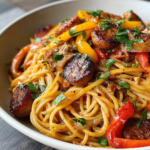
Savoring Spaghetti with Sausage and Peppers
Ingredients
- 12 ounces spaghetti
- 1 pound Italian sausage
- 2 tablespoons olive oil
- 1 medium onion sliced
- 2 bell peppers red and yellow, sliced
- 2 cloves garlic minced
- 1 can 14.5 ounces diced tomatoes
- 1 teaspoon dried oregano
- Salt and black pepper to taste
- Fresh basil leaves for garnish
Instructions
- Cook the spaghetti until al dente according to package instructions.
- In a large skillet, heat olive oil over medium heat.
- Add the sliced sausage to the skillet, breaking it up with a spatula.
- Once the sausage is browned, add sliced onion and bell peppers to the skillet.
- Stir in the minced garlic and cook for another minute.
- Pour in the canned diced tomatoes, along with oregano, salt, and pepper.
- Simmer the sauce to allow flavors to meld, about 15 minutes.
- Combine the cooked spaghetti with the sauce, tossing to coat evenly.
- Serve hot, garnished with fresh basil leaves.
Notes
Additional serving suggestions: pair with a crisp salad, garlic bread, or roasted seasonal vegetables for balance.
For make-ahead, prep components separately and assemble just before heating to preserve texture.
Taste and adjust with acid (lemon/vinegar) and salt right at the end to wake up flavors.