Introduction
As Thanksgiving approaches, the anticipation of gathering around a table filled with traditional dishes fills the air. Among the must-haves, buttery herb stuffing stands out as a timeless favorite that brings warmth and flavor to the meal. This dish is more than just a side; it carries the essence of family, tradition, and an inviting aroma that wraps around us like a cozy blanket.
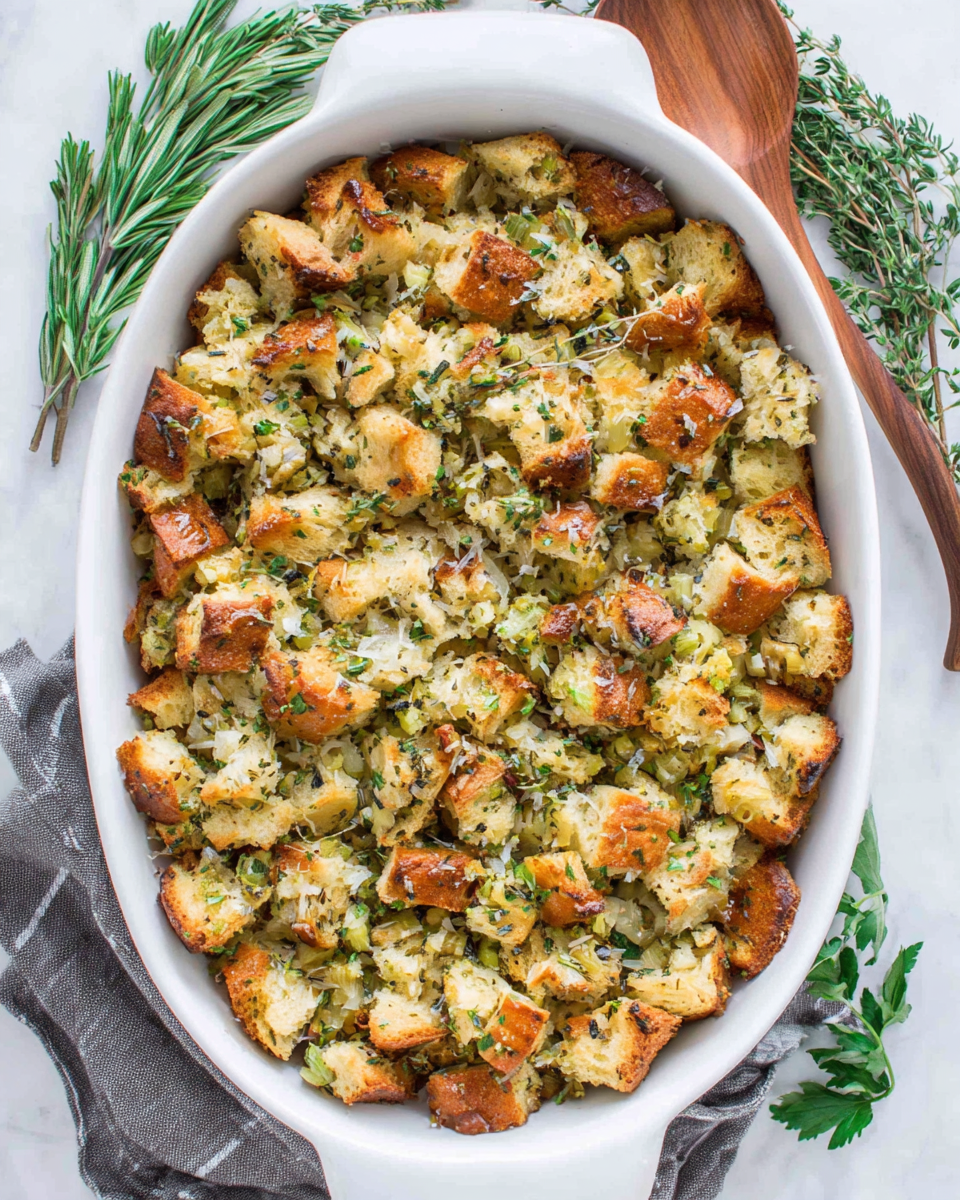
Buttery herb stuffing is a delightful blend of textures and tastes, featuring toasty bread, fresh herbs, and aromatic vegetables. Each element plays a vital role in creating a harmonious dish that complements the classics like turkey and gravy. Whether your family prefers a straightforward recipe or one with a twist, our favorite version is sure to please.
Ingredients
- 1 loaf of rustic bread (about 12 cups, cubed)
Choosing a dense, rustic bread allows for a sturdy stuffing that holds up well during baking. The cubes should be allowed to dry slightly for optimal texture, helping them absorb flavors without becoming soggy. - 1 cup unsalted butter
Butter is essential for its rich flavor and moisture, ensuring each bite of stuffing is indulgently decadent. It also aids in sautéing vegetables, enhancing their natural sweetness. - 1 large onion, diced
Onion provides a sweet and savory base that infuses the stuffing with flavor. Cooking the onion allows it to caramelize slightly, adding depth to the overall taste. - 3 celery stalks, diced
Celery contributes a crunchy texture and subtle flavor, brightening the dish. It complements the other ingredients while adding visual appeal. - 2 cloves garlic, minced
Garlic offers a robust aroma and enhances the taste of the stuffing. It bonds beautifully with the herbs and vegetables to create a rich flavor profile. - 1 tablespoon fresh sage, chopped
Sage has a warm, earthy flavor that is iconic in stuffing recipes. Its essence captures the spirit of Thanksgiving, making it a must-have herb. - 1 tablespoon fresh rosemary, chopped
Rosemary provides a fragrant infusion with its pine-like aroma, elevating the stuffing to a gourmet experience. Its boldness pairs well with buttery dishes. - 1 tablespoon fresh thyme leaves
Thyme’s subtle earthiness enhances the other herbs and ingredients without overpowering them. Fresh herbs bring a brightness that dried versions cannot replicate. - 4 cups low-sodium chicken or vegetable broth
Broth is crucial for moistenings the stuffing, binding the ingredients together. Using low-sodium broth allows you to control the saltiness while still imparting a savory depth. - 1 tablespoon salt
Salt enhances all the flavors in the stuffing, bringing out the natural sweetness of the vegetables and complementing the richness of the butter. - 1 teaspoon black pepper
Black pepper adds a gentle heat to the dish, balancing the richness and ensuring a well-rounded flavor profile. - 1 cup diced apples (optional)
Adding apples brings a sweet and tangy element to the stuffing, enhancing the overall flavor while providing a hint of freshness. This optional ingredient is perfect for those who want a twist on the traditional.
Directions & Preparation
Step 1: Prepare the bread cubes
Start by cutting the loaf into cubes, about 1-inch in size. If the bread is fresh, consider toasting it lightly in the oven for 10 to 15 minutes at 300°F to dry it out. This ensures that the cubes will absorb the flavors of the herbs and broth effectively during baking, preventing a soggy stuffing.
Step 2: Sauté the vegetables
In a large pot, melt the unsalted butter over medium heat. Add the diced onion and celery, cooking them until softened, about 5-7 minutes. Stir in the minced garlic and cook for an additional minute. This step softens the vegetables and enhances their flavors, creating a fragrant base for the stuffing.
Step 3: Mix in the herbs and spices
Add the chopped sage, rosemary, and thyme to the pot, stirring to coat the sautéed vegetables. Season with salt and pepper and cook for another 2 minutes to bloom the herbs. This allows their essential oils to release, deepening the stuffing’s flavor profile.
Step 4: Combine bread cubes and broth
In a large mixing bowl, place the toasted bread cubes. Pour the sautéed vegetable mixture on top, followed by the broth. Gently stir to combine, ensuring all the bread is moistened without crushing the cubes. Properly mixing these components ensures every bite is flavorful, avoiding dry patches in the final dish.
Step 5: Add optional apple cubes
If you're including apples, fold them into the stuffing mixture now. The sweet apples will contrast beautifully with the savory elements. This added taste contributes an unexpected yet delightful dimension, especially for those accustomed to traditional flavors.
Step 6: Transfer to a baking dish
Pour the stuffing mixture into a buttered 3-quart baking dish, spreading it out evenly. You want the stuffing to bake uniformly, achieving a crispy top while remaining moist inside. Cover the dish with aluminum foil to prevent excess browning as it bakes.
Step 7: Bake the stuffing
Preheat your oven to 350°F. Bake the covered stuffing for 30 minutes, then remove the foil and bake for an additional 15-20 minutes until the top is golden brown and crispy. This two-stage baking allows the stuffing to develop a nice crust on top while keeping the interior tender and moist.
Step 8: Let it rest before serving
Once out of the oven, allow the stuffing to rest for 10-15 minutes before serving. This resting period lets the flavors meld and makes it easier to scoop out portions without it falling apart, ensuring a beautiful presentation on your Thanksgiving table.

Customizability of Herb Stuffing
One of the beautiful aspects of buttery herb stuffing is its versatility. While the recipe provided offers a solid base of flavors, there’s ample room for personal touches. Consider adding nuts, like walnuts or pecans, for a crunchy dimension, or dried fruits such as cranberries for a touch of sweetness. Experiment with different types of bread, or integrate seasonal ingredients that resonate with your family's tastes.
Pairing Stuffing with Other Dishes
Buttery herb stuffing pairs exceptionally well with classic Thanksgiving staples. Its rich flavor beautifully complements the savory notes of roasted turkey and the tanginess of cranberry sauce. The stuffing can also serve as a delightful side to a variety of dishes, including glazed ham and roasted vegetables, making it a versatile option year-round—not just for holiday dinners.
Making Stuffing Healthier
For those mindful of health, there are simple adjustments to consider while maintaining flavor. Swap out some or all of the butter with olive oil, which adds heart-healthy fats. Opting for whole grain bread can increase fiber content, and using low-sodium broth ensures you can enjoy the dish without the excess salt. These changes make it easier to indulge in this beloved dish without compromising wellness.
FAQs
What if my stuffing is too dry after baking?
If your stuffing comes out dry, you can sprinkle a bit more warm broth over it and gently fluff it with a fork. This helps reintroduce moisture without compromising the texture.
How can I enhance the flavors of my stuffing?
To elevate flavors, consider adding additional herbs like parsley or chives, or spices such as nutmeg or mustard powder. A splash of wine or balsamic vinegar can also deepen the taste.
What type of bread works best for stuffing?
Sturdy bread varieties such as sourdough, ciabatta, or baguette are excellent choices due to their ability to hold up when mixed with liquids without turning mushy.
Can I use dried herbs instead of fresh?
Yes, you can substitute dried herbs if fresh are unavailable. Typically, use one-third of the amount of dried herbs, as they are more concentrated in flavor.
What should I do if my stuffing is too thick?
If your stuffing turns out too thick, add more broth, a little at a time, mixing until it reaches your desired consistency. This will ensure the stuffing remains moist and flavorful.
Can I make this stuffing vegetarian?
Absolutely! Simply replace the chicken broth with vegetable broth, and ensure the butter is from a plant-based source or use olive oil.
Conclusion
Crafting a batch of buttery herb stuffing invites the warmth of family traditions to your holiday table. Its comforting flavors and customizable nature make it a cherished side that embodies the spirit of Thanksgiving.
As you prepare for upcoming feasts, remember that the joy lies not just in the food, but in sharing these moments with loved ones. Embrace variations and make this stuffing your own, creating lasting memories with each delicious bite.
Recipe Card

Irresistible Apple Cinnamon Muffins You Must Try
Ingredients
- 2 cups all-purpose flour
- 1 cup granulated sugar
- 1 tablespoon baking powder
- 1 teaspoon ground cinnamon
- 1/2 teaspoon salt
- 1/2 cup unsalted butter melted
- 1 large egg
- 1 cup milk
- 1 1/2 cups peeled and diced apples
- 1/2 cup chopped nuts optional
Instructions
- Preheat the oven to 350°F (175°C) and line a muffin tin with paper liners.
- In a large mixing bowl, combine the flour, sugar, baking powder, cinnamon, and salt.
- In another bowl, whisk together the melted butter, egg, and milk until well combined.
- Pour the wet ingredients into the dry ingredients and stir until just combined.
- Gently fold in the diced apples and nuts if using.
- Scoop the batter into the prepared muffin tin, filling each liner about two-thirds full.
- Bake for 18-20 minutes, or until a toothpick inserted in the center comes out clean.
- Once baked, allow the muffins to cool in the tin for 5 minutes before transferring them to a wire rack.
Notes
Additional serving suggestions: pair with a crisp salad, garlic bread, or roasted seasonal vegetables for balance.
For make-ahead, prep components separately and assemble just before heating to preserve texture.
Taste and adjust with acid (lemon/vinegar) and salt right at the end to wake up flavors.